Closed white garage door with new bottom weather seal on a wet driveway in fall in Denver, NC

Garage Door Weather Stripping Replacement in Denver, NC

Garage Door Weather Stripping Replacement in Denver, NC: Stop Fall Water, Drafts, and Pests

A worn garage door seal is easy to ignore until the first fall rain leaves a puddle along the wall, cold air starts reaching the room above the garage, or you notice leaves and insects coming in under the door.

If you can see daylight around a closed door, feel a draft, or find water and red-clay grit inside after a storm, it is time to look at the weather stripping. Advanced Overhead Door NC provides garage door repair in Denver, NC, including damaged bottom seals and perimeter weather stripping. Call 704-966-4128 for service or request an appointment online.

What does garage door weather stripping do?

Weather stripping, sometimes called weather seal or weatherstripping, closes the small gaps where the door meets the floor, side jambs, and header. Most residential doors have a flexible bottom seal and may also have side and top perimeter seals.

When those pieces fit correctly, they help keep out:

  • Wind-driven rain and surface runoff
  • Drafts, dust, pollen, and red-clay grit
  • Leaves, insects, and small pests
  • Unwanted outdoor air in garages attached to the home

A weather seal is not a substitute for a properly operating garage door. It does not fix a door that is crooked, out of balance, or stopping before it reaches the floor. But when the door is operating normally, a healthy seal makes the closing edge fit much better.

How can I tell if my garage door seal needs replacement?

With the door closed, obvious daylight, gaps, or a loose flap are signs that the seal is no longer doing its job.

Common warning signs include:

  • Cracked, brittle, flattened, or torn rubber along the bottom of the door
  • Daylight visible below a corner or along the side of the door
  • Rainwater, damp leaves, or dirt entering after a storm
  • Drafts, bugs, or spider webs collecting at the opening
  • A musty smell, damp boxes, or rust beginning on nearby hardware
  • A seal that is pulling out of its retainer or hanging unevenly

One detail matters: a gap at only one corner is not always a seal problem. The door may be sitting unevenly because of a worn roller, loose track hardware, cable issue, or spring problem. If the door looks tilted, makes a new scraping noise, or does not close evenly, stop using it and schedule professional garage door repair instead of trying to force a new seal into place.

Why do Denver, NC garage door seals fail in fall?

Garage door seals wear gradually, but fall often exposes the problem. Around Denver and Lake Norman, cooler nights, rain, leaves, and pine needles affect the opening. Older vinyl becomes stiff, while trapped dirt prevents full contact with the concrete.

Local conditions that can speed up wear include:

  • Red-clay dust and driveway grit grinding against the bottom edge
  • Wet leaves and pine needles holding moisture against the seal
  • Afternoon sun on doors facing west or south, followed by cool nights
  • Uneven concrete, small settling changes, or a sloped driveway that leaves one corner exposed
  • Frequent daily use in busy households throughout Denver, Westport, Sherrills Ford, and nearby Lake Norman communities

That is why a door that seemed fine in August may suddenly leave a visible gap in October. Replacing a tired seal before heavier winter weather arrives is a practical way to protect the garage and catch any door-alignment problem early.

Can a new weather seal stop water from coming under the garage door?

Often, yes. If the door is level and closes fully, a correctly sized bottom seal can close a small, consistent gap caused by worn material. Side and top weather stripping can also help stop wind-blown rain and drafts.

However, a new seal cannot solve every water issue. Water may still enter when:

  • The door stops short of the floor or reverses before closing
  • One side of the door is lower or higher than the other
  • The driveway slopes toward the garage and sends a large amount of runoff to the opening
  • A spring, cable, roller, or track problem has changed the door's position

If the door is not sitting squarely, do not adjust the bottom brackets, cables, tracks, or torsion springs yourself. Those components can be under significant tension. A technician can determine whether you need a straightforward weather-stripping replacement or a repair to restore proper door movement. For a door that is leaning or has a loose cable, see our guide to garage door cable repair and call for service.

What can homeowners safely check before calling?

You do not need tools to identify a worn seal. With the door fully closed, these are safe checks:

  1. Look for light. From inside, note any daylight under the bottom edge or around the sides.
  2. Inspect the material. Look for tears, hardened sections, missing pieces, or a seal that has slipped out of the bottom retainer.
  3. Clear debris. Sweep leaves, gravel, and pine needles away from the threshold so the bottom edge can sit flat.
  4. Check after rain. If water appears inside, take a photo of where it enters. This helps the technician determine whether the issue is the seal, the door position, or drainage.
  5. Listen during a normal cycle. If the door closes smoothly and evenly, the issue may be limited to the seal. If it drags, jerks, or becomes uneven, stop the test and call a professional.

Do not loosen the bottom brackets, remove cable hardware, change spring tension, or raise the opener force setting to make the door press harder into the floor. Those actions can turn a simple service call into a damaged door or a safety hazard.

What affects garage door weather stripping replacement cost in Denver, NC?

Replacement cost depends on door width, seal profile, whether side or top seals are worn, and whether the door needs an adjustment first.

Costs can increase when the bottom retainer is bent, a section of the door is damaged, or a mechanical issue is causing the door to sit unevenly. That is why a quick inspection is better than buying a generic strip that may not fit your door. Advanced Overhead Door NC explains the condition of the seal and any related repair before work begins, so you can decide what makes sense for your home.

How does professional weather-stripping replacement work?

At a service visit, our technician first checks that the garage door is closing level and operating safely. We then identify the correct bottom, side, or top seal for the door and inspect the retainer, bottom panel, rollers, tracks, cables, and weather-exposed hardware.

When replacement is the right solution, we remove the worn material, install the correct seal, and verify that it makes even contact without interfering with door travel. If the door needs attention beyond the seal, we explain the repair options clearly. A seasonal appointment can also include a professional garage door maintenance service to inspect moving parts and help prevent an unexpected failure.

Frequently asked questions about garage door weather stripping

Can I replace only the bottom garage door seal?

Yes, if the bottom seal is the only worn component and the door closes level. If the sides or header have gaps too, replacing the perimeter weather stripping at the same time may provide a better result.

How long does garage door weather stripping last?

Its lifespan depends on sun exposure, weather, use, and the condition of the driveway. Inspect it each fall and spring. Replace it when it becomes cracked, flattened, torn, or no longer seals evenly.

Why is there a gap under only one corner of my garage door?

It could be a worn bottom seal, but it can also point to an uneven door, track issue, cable problem, or driveway slope. If the door looks crooked or runs roughly, schedule a repair inspection rather than attempting an adjustment yourself.

Will weather stripping make an attached garage more comfortable?

It can reduce drafts, dust, moisture, and outside air entering around the door. It is one part of an overall approach that may also include proper insulation and door maintenance.

Is weather stripping an emergency repair?

A worn seal is usually not an emergency by itself. But if water is entering the garage, pests are getting in, or the door will not close evenly, call early for the earliest appointment. Same-day availability may be possible for urgent repair concerns.

Need garage door weather stripping replacement in Denver, NC?

Do not wait for repeated rain, damp storage, or a pest problem to confirm that your seal has failed. Advanced Overhead Door NC is locally owned and serves Denver, Lake Norman, Sherrills Ford, Mooresville, Cornelius, Huntersville, Lincolnton, Stanley, and nearby Lincoln and Mecklenburg County communities.

For a worn bottom seal, side weather stripping, or a garage door that is not closing evenly, call 704-966-4128 now or request a free estimate. We will identify the real cause, explain the repair clearly, and help get your garage ready for the season.

Garage Door Cable Repair

Garage Door Cable Repair

If your garage door is the main way you come and go, those thin steel cables quietly carry a lot of responsibility. August in Denver, NC can be tough on them. Heat, humidity, pop-up storms, and extra summer traffic add up. If you have noticed a tilt in the door, a sudden bang, or a tangle at the bottom bracket, you might be looking at a cable problem.

As your neighbors in Lincoln and Mecklenburg Counties, Advanced Overhead Door NC is here to help you spot issues early and know when to call in a pro. If you need fast service or just have questions, call 704-966-4128 or visit garagedoorexpertservice.com.

What Garage Door Cables Do, And Why They Matter

Garage door lift cables are high-tension steel strands that work with the springs to raise and lower the weight of the door. On most residential doors in our area you will see:

  • Torsion spring systems, where cables wrap around a drum above the door.
  • Extension spring systems, where cables run through pulleys along the horizontal tracks.

When cables are healthy, the door lifts evenly and stays balanced. When they fray, stretch, rust, or jump off the drum, you can end up with a crooked door, a jammed opener, or a dangerous situation at ground level.

August Stressors In Lincoln And Mecklenburg Counties

Late summer brings a mix of conditions that accelerate cable wear:

  • High humidity and sweat dripping onto the bottom cable ends, which can invite rust.
  • Sudden storms around Lake Norman, which can push grit and debris onto the tracks and drums.
  • Extra use with family visits, last-minute beach trips, and back-to-school runs.
  • Heat expansion in metal components, which can reveal small misalignments.

Homes in Denver, Sherrills Ford, Cornelius, Huntersville, Lincolnton, Stanley, Maiden, and across Charlotte may see more frequent cable issues this time of year. If your door already needs a little lube or a balance adjustment, August can bring the problem to the surface.

Clear Signs Your Garage Door Cables Need Attention

Keep an eye out for:

  • Frayed strands along the cable, especially near the drum or bottom bracket.
  • Rust discoloration or kinks in the line.
  • A door that is lower on one side, or gaps under only one corner when closed.
  • The cable has jumped the drum and is bunched up, sometimes called a bird’s nest.
  • Loud bang or snap from the door area, followed by poor movement. This can also be a spring, so treat it with caution.
  • The opener strains, chatters, or refuses to move the door, yet the motor runs.
  • Visible slack in one cable while the other looks tight.

If you see any of these, stop using the door and call 704-966-4128. Using a door with a damaged or off-track cable can twist panels, bend tracks, and risk personal injury.

Is It Safe To Keep Using The Door?

If a cable is frayed, off the drum, or broken, do not operate the door. The weight is no longer evenly supported. Continuing to run the opener can fold the door or pull it off track. If you need to put the door down for security, call us for an urgent visit. We offer prompt service across Denver and nearby communities.

If the door is stuck open and you feel tempted to pull the emergency release, do so only if the door is fully down or you have two adults supporting the door weight and you are certain of the situation. Garage door systems are under heavy tension. When in doubt, wait for a professional.

What Causes Cable Problems Here At Home

  • Moisture and rust. Our humid summers and occasional lake breeze can introduce oxidation, especially on the bottom few inches of cable.
  • Dirt and grit. Red clay dust, pollen, and driveway sand can grind into the strands and drums.
  • Age and cycle count. A busy family can cycle a door many times per day. Over time, the strands lose strength.
  • Misalignment. A door that is out of balance or tracks that are not parallel cause uneven tension and premature fraying.
  • Bottom bracket wear. If the bracket pivots poorly or hardware loosens, the cable can chafe.
  • DIY adjustments that go wrong. Hand winding a drum or mismatching cable length can create a dangerous imbalance.

Simple Checks You Can Do Safely

There are a few homeowner-friendly checks that do not require tools:

  • Visual inspection. With the door closed and the opener unplugged, look along each cable from bottom bracket to drum. If you see frays or rust, stop there and call.
  • Listen and observe. Run the opener for a few inches if everything looks normal, then stop. If you notice leaning, scraping, or jerking, do not continue.
  • Keep the area clean. Sweep leaves and grit from the tracks and around the bottom brackets to reduce abrasion.

Do not remove covers, loosen set screws, or attempt to rewind a drum. Cables and springs store serious energy. A small slip can have big consequences.

Why Professional Cable Repair Matters

Replacing a garage door cable is more than swapping a line:

  • Proper diagnosis. A frayed cable may be the symptom. The real cause could be worn drums, a failing bearing plate, or a door that is out of balance.
  • Correct parts. Cable thickness, length, and end fittings must match your door height, weight, and hardware.
  • Equalization. Tension must be balanced left to right and set to the right torque for safe, smooth travel.
  • Safety. Specialized tools and training reduce risk to your home and your family.

A professional repair saves money long term. It prevents repeat failures, protects your opener, and keeps your door panels from bending under uneven load.

Our Cable Repair Process At Advanced Overhead Door NC

When you call 704-966-4128 for cable repair in Denver, NC or nearby:

  1. We schedule a convenient window and keep you updated. We respect your time and your driveway.
  2. On arrival, we perform a 26 point safety and function inspection. We look at cables, drums, springs, bearings, hinges, rollers, tracks, and opener settings.
  3. We explain our findings in plain language. You see photos of any worn parts and know your options before work begins.
  4. We replace cables in matched pairs when appropriate, set the correct tension, and confirm door balance by hand.
  5. We tune the opener force and travel limits, then lubricate key points with the right products for our climate.
  6. We test the safety reversal and photo eyes, and clean up the work area so you can get on with your day.

Most cable repairs are completed in a single visit. If we discover related issues, like a cracked drum or a fatigued spring, we will review solutions and pricing before we proceed.

August Maintenance Tips To Help Cables Last

A few small habits go a long way, especially in late summer:

  • Keep the bottom seal clean. Wipe away wet leaves and grit that collect by the door edges after storms.
  • Lubricate moving parts lightly. Use a garage door rated lubricant on hinges and rollers, not on the cables themselves. Wipe any overspray off the drums.
  • Check balance monthly. With the opener disconnected and the door closed, lift the door halfway with both hands. If it feels heavy or will not stay in place, you likely need professional adjustment.
  • Watch the corners. When the door closes, look at both bottom corners. If one side hits the floor first, schedule service promptly.
  • Mind the mower and trimmer. Throwing line or debris at the bottom brackets can nick the cable ends.

If you prefer a pro to handle seasonal tune-ups, we are happy to set up a maintenance visit. Call 704-966-4128 or visit garagedoorexpertservice.com to get on the schedule.

Frequently Asked Questions About Cable Repair

  • Can I replace just one cable? We often replace both so tension remains even and the door stays true. Your technician will advise based on wear patterns and hardware type.

  • How long do cables last? It depends on use and conditions. In our climate, a well maintained system can go many years, but high cycle doors or coastal exposure need closer attention.

  • Are stainless cables worth it? In damp or lakeside settings, corrosion resistant options can help. The right choice also depends on your drums, springs, and door weight.

  • What if my cable snapped and the door is stuck open? Do not try to force it down with the opener. Call 704-966-4128 for urgent service. We can safely secure and close the door, then repair the cause.

  • My cable came off the drum. Can I rewind it myself? We strongly recommend against it. The torsion tube and springs are under high tension. A professional can reset and equalize everything safely.

Proudly Serving Denver, NC And Nearby Communities

Advanced Overhead Door NC is locally owned and committed to keeping our neighbors moving. We serve homes across:

  • Denver and the Lake Norman shoreline
  • Lincolnton, Maiden, Stanley, and Sherrills Ford
  • Cornelius, Huntersville, Davidson, and north Charlotte
  • Communities throughout Lincoln and Mecklenburg Counties

Whether your garage faces heavy afternoon sun in Denver or early morning shade in Huntersville, we tailor our repair and maintenance advice to your home and your usage.

Real-World Examples From The Field

  • A Denver homeowner noticed a faint rub mark near the drum and called early. We found a small kink beginning to fray. By replacing the cables and aligning the drums, we prevented a weekend breakdown.

  • In Cornelius, a door leaned an inch to the left when closed. The left cable had stretched from rust at the bottom bracket. After installing new cables and a fresh bottom seal, the door leveled perfectly and sealed out rain.

  • A family in Lincolnton lost power during a storm and pulled the release with the door halfway up. The right cable spooled off the drum. We safely lowered the door, reset the drums, rebalanced spring tension, and verified photo eyes and opener settings.

Each of these could have led to bigger problems if left alone. Quick attention and proper repairs paid off.

Ready For Reliable Cable Repair This August?

If your garage door cables are frayed, rusty, off the drum, or just acting suspicious, do not wait. A small issue can escalate quickly, especially during our humid late summer stretch.

We will get your door lifting smoothly again, with friendly service and clear communication from start to finish. Enjoy the rest of your August with a garage door you can trust.

My Garage Door Opener Stopped Working: What to Check Before You Call

You press the button, and nothing happens. Or the door starts to move, shudders, and reverses for no apparent reason. When your garage door opener stops working, it is incredibly frustrating. In Denver, NC, where many homes rely on their garage as the primary entrance, a broken opener means you are either stuck outside or your car is trapped inside.

A malfunctioning opener is one of the most common reasons homeowners call for emergency repair. But before you panic or assume you need to buy a brand new unit, there are a few things you can check yourself.

This guide covers the most frequent causes of opener failure in the Denver and Charlotte metro areas, what those blinking sensor lights mean, and how to know if your system needs a simple repair or a full replacement.

Why Did My Opener Stop Working?

When a garage door opener fails, the cause usually falls into one of four categories. While some issues require a professional, others are surprisingly simple to rule out.

Why does my garage door opener click but the door won't open?

A click with no movement usually means the opener received the signal but the motor could not move the door. The most common causes are a broken spring that leaves the door too heavy, the manual slide lock engaged on the door, or a worn capacitor, logic board, or drive gear inside the opener.

  1. Stop pressing the button so the motor does not overheat.
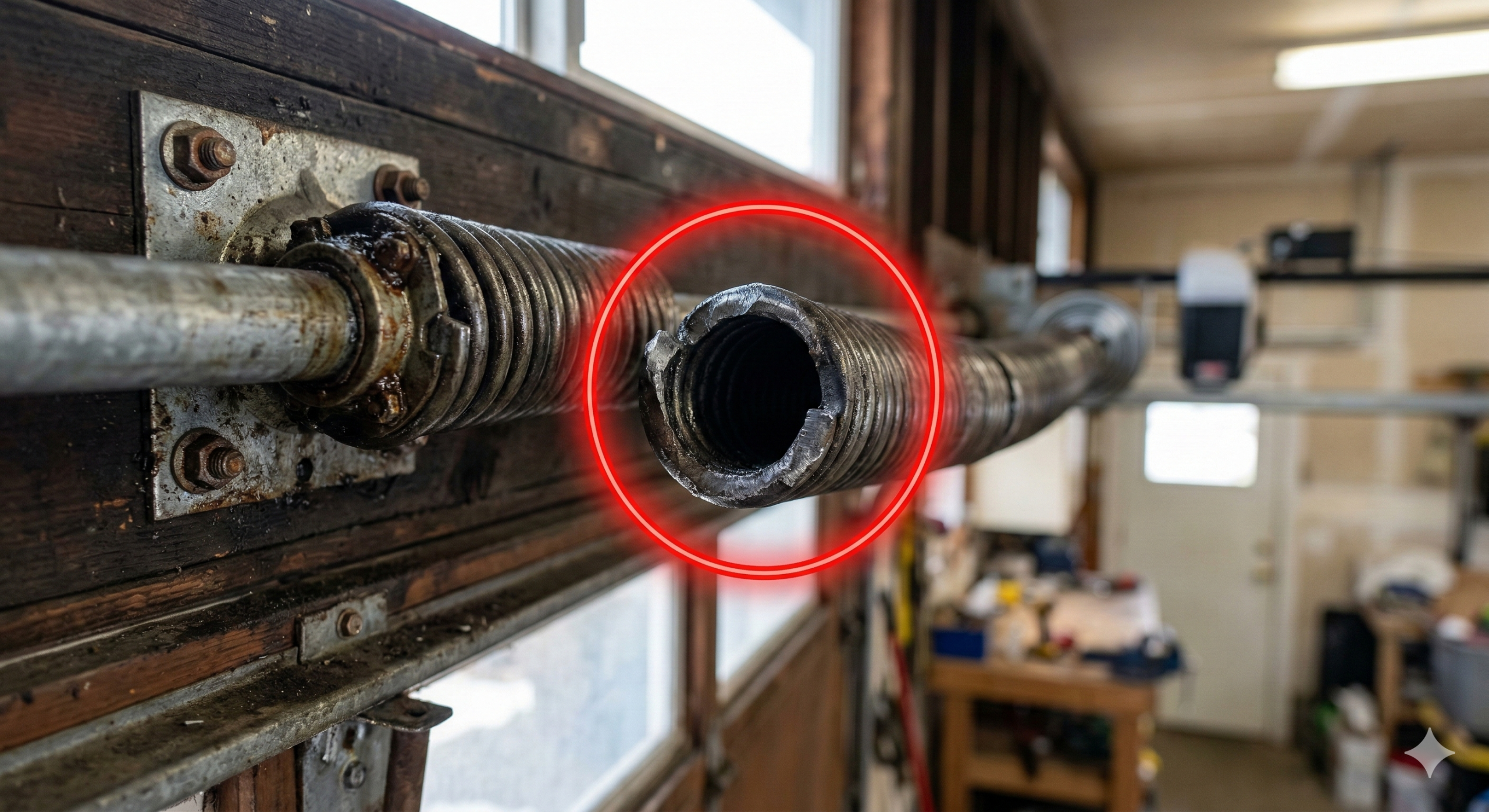
  2. Look at the springs above the door. A 2 to 3 inch gap in the coil means a spring is broken. Do not lift the door or pull the release cord. Torsion springs are dangerous to work on, so call a technician.
  3. Make sure the slide lock on the inside of the door is in the open position.
  4. If the springs and lock look fine, the problem is likely inside the opener. The cost section below covers typical opener repair pricing.

Call 704-966-4128 for spring or opener repair.

Power and Connection Issues

The most basic issue is a lack of power. Check if the opener is plugged in. Vibrations from the motor can loosen the plug over time. If it is plugged in but still completely dead, check your home's breaker panel. A power surge or a tripped breaker will shut the unit down entirely.

Why does my garage door remote not work when the wall button does?

If the wall button works but the remote does not, the opener motor is fine and the problem is with the remote or its signal. The most common causes are a dead remote battery, the lock feature turned on at the wall control, or a remote that lost its programming.

  1. Replace the remote battery. Most newer remotes use a 3 volt coin battery.
  2. Look at the wall control. If it has a lock button and its light is blinking, the lock is on. Press and hold the lock button until the light stops blinking.
  3. Reprogram the remote with the LEARN button on the opener (see our garage door opener guide).
  4. If the remote only works up close, LED bulbs in or near the opener can block the signal.

Still not working? Call 704-966-4128.

Motor Failure

If you hear a grinding noise or a loud humming sound but the door does not move, the motor itself is struggling. This often happens when internal gears strip or the motor capacitor fails. In older units, the motor simply wears out from years of lifting a heavy door multiple times a day.

Sensor Misalignment

If the door opens fine but refuses to close, or if it starts to close and immediately reverses, the safety sensors are almost certainly the culprit. More on this below.

Read more in our 5-Minute Garage Door Maintenance Checklist to catch these issues before they become emergencies.

The Sensor Problem Most Homeowners Miss

Safety sensors are located at the bottom of the track on both sides of the door. They project an invisible beam across the opening. If that beam is broken or interrupted, the door will not close. This is a critical safety feature designed to protect children, pets, and vehicles from a closing door.

However, these sensors are incredibly sensitive. In Denver, NC, we frequently see sensors knocked out of alignment by lawnmowers, trash cans, or a slight bump from a car bumper. Humidity can also cause the mounting brackets to shift slightly over time.

What the Blinking Light Means

Look at the small LED lights on each sensor. If one of the lights is blinking or completely off, the sensors are out of alignment. A solid light on both sensors means the beam is connected.

How to Fix It

You can gently adjust the sensor bracket by hand until both lights become solid again. Also check the lenses for dirt or cobwebs. A quick wipe with a clean cloth is often all it takes to restore the connection. If both lights are solid and the door still will not close, the sensor wiring may be damaged, which requires a technician.

Signs Your Opener Needs to Be Replaced, Not Repaired

Many homeowners wonder whether to repair their current opener or invest in a new one. A simple sensor adjustment or a fresh remote battery is a cheap fix. But there are situations where replacement is the smarter long-term decision.

Age Over 10 to 15 Years

The average lifespan of a garage door opener is 10 to 15 years. If your unit is in that range and the motor is failing, repairing it is often a waste of money. A new unit will be quieter, more reliable, and come with a manufacturer warranty.

No Safety Sensors

If your opener was manufactured before 1993, it likely does not have safety sensors at all. Federal law now requires them on all new installations. If your opener lacks this feature, it should be replaced immediately for the safety of your family.

Grinding Motor Noises

If the motor sounds like it is grinding metal on metal, the internal gears are stripped. Gears can be replaced individually, but the labor cost often makes a full unit replacement the more sensible option.

No Backup Battery

Modern openers include battery backup, meaning your door will still operate during a power outage. If your current unit leaves you stranded every time a storm rolls through the Denver area, upgrading is a practical move.

What Does Opener Repair or Replacement Cost in Denver, NC?

Pricing depends entirely on what is wrong with the unit. Here is what homeowners in Denver and the Charlotte metro typically pay.

For a standard repair such as realigning sensors, replacing stripped gears, or fixing wiring issues, costs typically range from approximately $100 to $200. If the unit is beyond repair, a new LiftMaster opener runs approximately $645 to $700 installed for a chain drive or approximately $680 to $780 for a belt drive, which includes the new opener, mounting hardware, and professional installation. The final price depends on whether you choose a chain-drive or belt-drive unit, and the horsepower needed to lift your specific door.

For a full breakdown of pricing, check our guide on How Much Does Garage Door Repair or Replacement Cost in Denver and Charlotte?

What to Do Right Now

If your garage door opener is not working, follow these steps before calling anyone:

  1. Check the remote batteries: Replace them first. It is the most common fix and takes 30 seconds.
  2. Look at the sensor lights: If one is blinking or off, try gently adjusting the sensor bracket until both lights are solid.
  3. Check the outlet and breaker: Make sure the unit has power. A tripped breaker is an easy fix.
  4. Do not force the door: If the opener is struggling or making unusual sounds, stop pressing the button. Forcing it can burn out the motor or cause the door to come off track entirely.

If none of these steps solve the problem, it is time to call a professional.

Need Fast Opener Repair in Denver, NC?

A broken opener is a major inconvenience, but it does not have to ruin your day. Advanced Overhead Door NC provides fast, professional repair and replacement services for homeowners in Denver, Charlotte, and the surrounding communities. Our technicians carry the parts needed to fix most opener issues on the spot, and we offer same-day service for urgent situations.

Stop fighting with a door that refuses to move. Call Advanced Overhead Door NC today at 704-966-4128 for service you can trust.

Garage door off track on a brick home in Denver, NC

Garage Door Off Track in Denver, NC: What Caused It, What It Costs, and Why You Shouldn’t Touch It

It happens fast. You are backing out of your driveway in Denver, NC, and you hear a sudden scrape. Or maybe you press the button to close the door, and instead of a smooth descent, the door jerks, tilts to one side, and stops moving completely. You look up and see that the rollers have popped out of the metal track. Your garage door is officially off track, and you are stuck.

An off-track garage door is not just an inconvenience. It is a serious safety hazard that requires immediate professional attention. A standard two-car garage door weighs between 200 and 280 pounds. When it is properly aligned, the tracks guide that weight safely. When it derails, all that weight becomes unstable and unpredictable.

This guide explains why garage doors go off track, what it typically costs to fix the problem in the Denver and Charlotte metro areas, and why attempting a DIY repair is the most dangerous and expensive mistake a homeowner can make.

Why Did My Garage Door Go Off Track?

Garage doors do not derail for no reason. While the failure might seem sudden, it is almost always the result of a specific impact or long-term wear that finally reached a breaking point. In our experience serving Denver and the surrounding areas, these are the three most common culprits.

Vehicle Impact or Accidental Collisions

The leading cause of a derailed garage door is a direct hit. This often happens when a homeowner backs into a partially closed door, or when a vehicle bumps the track inside the garage. Even a minor tap from an SUV roof rack can generate enough force to bend the vertical tracks or pop the rollers out of their channels. Once a single roller leaves the track, the entire door becomes unbalanced.

Worn or Broken Rollers

Garage door rollers have a lifespan. Builder-grade plastic rollers often crack after a few years of daily use. Metal rollers with unsealed bearings can rust and seize up, especially given the high humidity we experience during North Carolina summers. When a roller stops spinning smoothly, it drags against the track. Eventually, the friction causes the roller to snap or jump out of the track entirely, forcing the remaining rollers to carry a load they were not designed to support.

Bent Tracks and Foundation Shifts

The tracks guiding your door must be perfectly parallel. If they bend inward, the rollers bind and get stuck. If they bow outward, the rollers slip out. Tracks can bend from an accidental impact, but they can also warp gradually due to extreme temperature swings or slight shifts in your garage floor and foundation.

Read more in our 5-Minute Garage Door Maintenance Checklist to catch worn rollers before they fail.

Why is my garage door crooked or higher on one side?

A garage door that sits crooked or higher on one side usually has a cable problem. A cable may have slipped off its drum, frayed, or snapped, so one side lifts while the other lags. A broken spring on one side or a bent track can cause the same thing. Stop using the door and call a technician.

Running the opener on an uneven door can pull it out of its tracks and bend panels, which turns a smaller repair into a larger one. Cables and springs hold the door’s full weight under high tension, so do not try to adjust or reattach them yourself. If the door is closed, leave it closed until a technician arrives. Call 704-966-4128.

Is It Safe to Use the Door?

The short answer is absolutely not. If your garage door is off track, you must stop using it immediately.

Many homeowners assume that if the door is still hanging there, it is somewhat secure. That is a dangerous misconception. When a door derails, the entire counterbalance system is compromised. The tension cables may slacken on one side and bear double the load on the other. At any moment, an off-track door could collapse completely, shift suddenly and crush whatever is underneath, or pull the remaining track hardware right off the wall.

Do not press the opener button again. Forcing the automatic opener to move a jammed door will almost certainly strip the gears inside the motor, turning a track repair into a full opener replacement.

What Does Off-Track Repair Cost in Denver, NC?

Homeowners often worry that an off-track door means buying a brand new system. Fortunately, that is rarely the case if you act quickly and avoid making the damage worse.

For a minor derailment where the door simply needs to be reset, the tracks realigned, and the system balanced, repair costs in Denver, NC typically range from $150 to $350. This covers the service call, the labor to safely secure the heavy door, and the precise adjustments needed to get it rolling smoothly again.

However, the cost escalates rapidly if the homeowner tries to force the door back into place. Prying at the tracks with a crowbar or pulling on the door panels can bend the tracks beyond repair, snap the tension cables, or ruin the door panels. When that happens, a $200 repair can quickly turn into an $800 to $1,200 track and hardware replacement job.

Wondering about overall pricing? Check our guide on How Much Does Garage Door Repair or Replacement Cost in Denver and Charlotte?

What Should You Do Right Now?

If you are currently staring at an off-track garage door, follow these steps to protect yourself and your property:

  1. Clear the area: Move children, pets, and vehicles away from the door. Treat the area directly under the door as a drop zone.
  2. Do not touch the rollers: Never try to push or hammer the rollers back into the track. You risk severe hand injuries and almost guarantee further damage to the door.
  3. Disconnect the opener: Pull the red emergency release cord hanging from the opener rail. This disconnects the motor so no one can accidentally activate it while you wait for help.
  4. Call a local professional: This is an emergency repair that requires heavy-duty lifting equipment, specialized tools, and an understanding of high-tension spring systems.

Not sure who to call? Read Choosing a Local Garage Door Company: Questions to Ask and Red Flags to Avoid.

Need Emergency Garage Door Repair in Denver, NC?

An off-track garage door is stressful, but it does not have to ruin your week. Advanced Overhead Door NC provides fast, professional emergency repair services for homeowners in Denver, Charlotte, and the surrounding communities. Our trained technicians know exactly how to secure your door, diagnose the root cause of the derailment, and get your system back on track safely and affordably.

Do not risk your safety or your wallet by trying to fix it yourself. Call Advanced Overhead Door NC today for same-day service you can trust.

Garage Door Spring Repair in Denver & Charlotte, NC

It's a sound no homeowner wants to hear: a sudden, loud BANG from the garage, like a firecracker just went off. You try to open the garage door, but the opener strains and the door only lifts a few inches — if at all. The culprit? A broken garage door spring.

This is one of the most common — and most urgent — repairs homeowners in Denver and Charlotte, NC face. Your garage door springs do the heavy lifting, counterbalancing hundreds of pounds of weight so you can open your door with ease. When they break, your door is stuck, your car is trapped, and your day comes to a grinding halt.

At Advanced Overhead Door NC, we've been handling broken springs across Lincoln County, Mecklenburg County, and the Lake Norman area for decades. This guide will walk you through everything you need to know: how to identify a failing spring, the difference between spring types, what repairs cost locally, and why this is one job you should never attempt yourself.

Stuck with a broken spring right now? Don't wait. Call Advanced Overhead Door NC at 704-966-4128 for same-day emergency service across Denver, Charlotte, Huntersville, Cornelius, and the surrounding areas.

Garage door repair technician on a ladder replacing a torsion spring inside a residential garage in Charlotte NC

Advanced Overhead Door NC technician performing a torsion spring replacement on a residential garage door in the Charlotte, NC area.


7 Warning Signs Your Garage Door Springs Are Failing

Infographic showing 7 warning signs your garage door springs are failing including a loud bang, heavy door, uneven opening, visible gap in coil, straining opener, slamming door, and loose cables

This infographic provides a quick visual summary of the key failure points discussed below. For a detailed explanation of each sign, continue reading.

Springs rarely snap without warning. If you notice any of the following, schedule an inspection before you're faced with a full emergency.

1. A Loud "Bang" from the Garage

The most unmistakable sign. A snapping spring sounds like a gunshot or a firecracker. If you hear this, stop using your door immediately and call a professional.

2. The Door Feels Extremely Heavy

Disconnect the automatic opener and try to lift the door manually. A properly balanced door should feel relatively light — around 20 to 30 pounds. If it feels like you're lifting a car, the springs are no longer doing their job.

3. The Door Opens Crooked or Unevenly

Most residential two-car garage doors use two springs. If one breaks, the door will lift at an angle, often jamming in the tracks and causing additional damage to cables, rollers, and the opener itself.

4. A Visible Gap in the Spring Coil

Look at the spring(s) mounted above your door. A broken torsion spring will have a clear 2-to-3-inch gap in the middle of the coil where the metal snapped under tension.

5. The Opener Strains or Stops After a Few Inches

Your garage door opener is designed to guide the door, not bear its full weight. If the motor is straining, reversing, or the door only rises a few inches before stopping, the springs have lost their counterbalancing force.

6. The Door Slams Shut Instead of Closing Slowly

A door that drops quickly and slams shut is a serious safety hazard. This means the springs can no longer control the door's descent. Keep children and pets away from the door until it is repaired.

7. Loose or Dangling Cables

The lifting cables work in tandem with the springs. If you see cables hanging loose on the sides of the door, it almost always means a spring has failed and the cable has gone slack.

Close-up of a broken garage door torsion spring with a visible gap in the coil highlighted by a red circle showing the point of failure where the spring snapped

A broken torsion spring with the snap point clearly visible. This is what you will see if you look above your garage door after hearing a loud bang.


Torsion vs. Extension Springs: What's the Difference?

Not all garage door springs are the same. Understanding which type you have is the first step in diagnosing the problem and knowing what to expect from a repair.

Torsion Springs are the modern standard for residential garage doors. They are large, tightly wound springs mounted on a metal shaft directly above the garage door opening. They work by twisting (torquing) to store and release energy as the door moves. Torsion springs are safer, longer-lasting, and provide a smoother, more controlled lift.

Extension Springs are an older system still found in many homes. They are smaller springs that run along the horizontal tracks on either side of the door, above the door panels. They work by stretching and contracting. While less expensive upfront, they have a shorter lifespan and are considered less safe because a broken extension spring can fly off the track at high speed if safety cables are not installed.

Feature Torsion Springs Extension Springs
Location Above the garage door opening on a metal shaft Along the sides of the upper horizontal tracks
Lifespan (Standard) 10,000–15,000 cycles (7–10 years) 5,000–10,000 cycles (4–7 years)
Safety Safer — contained on the shaft if it breaks Higher risk — can fly off if safety cables are absent
Operation Quality Smooth, balanced, quiet More jerky; less even lift
Cost to Replace $200–$450 depending on single or double $180–$250 for a pair
Best For All modern residential doors; heavy or wide doors Older homes with low headroom

For new installations and replacements, Advanced Overhead Door NC recommends torsion springs in virtually all cases. The improved safety, longer lifespan, and smoother operation make them the better long-term investment for Charlotte-area homeowners.

Labeled side-by-side comparison diagram of a torsion spring system versus an extension spring system on a residential sectional garage door

Left: A torsion spring system, mounted above the door on a central shaft. Right: An extension spring system, running along the horizontal side tracks. Both systems counterbalance the door's weight but differ significantly in safety, lifespan, and performance.


What Does Spring Replacement Cost in Charlotte & Denver, NC?

Cost is always top of mind, and we believe in transparent pricing. For a standard residential garage door in the Denver and Charlotte metro area, here is what you can expect to pay for professional spring replacement in 2025–2026.

Service Estimated Cost (Parts + Labor)
Single Torsion Spring Replacement $200 – $280
Double Torsion Spring Replacement $275 – $450
Extension Spring Replacement (Pair) $180 – $250
Upgrade from Extension to Torsion System $350 – $550
Emergency / Same-Day Service Call No extra charge at Advanced Overhead Door NC

These ranges reflect typical pricing in the Lincoln County and Mecklenburg County markets. Factors that can affect your final cost include the size and weight of your door, the spring wire gauge required, and whether additional components like cables or drums need to be replaced at the same time.

For a full breakdown of what garage door repairs cost in our area, see our detailed garage door repair cost guide for Denver and Charlotte.

Should you replace one spring or both? If your door has two springs and one breaks, we strongly recommend replacing both at the same time. Both springs have endured the same number of cycles and the same wear. Replacing only the broken one means the second spring will likely fail within months, requiring another service call. Replacing both at once saves you money and keeps your door balanced and safe.


Why You Should Never Attempt DIY Spring Repair

A quick search online will turn up plenty of tutorials for replacing garage door springs yourself. We urge you to ignore them. This is one of the most genuinely dangerous home repairs a homeowner can attempt, and here is why.

Garage door springs are wound under extreme tension — enough to counterbalance a door weighing 150 to 300 pounds. When a spring snaps or is improperly released, it releases that energy instantaneously. A broken spring can fly across a garage at tremendous force, and the winding bars used to adjust tension can become projectiles if they slip. Injuries from DIY spring repairs range from lacerations and broken bones to fatal accidents.

Beyond the immediate safety risk, incorrect spring sizing or improper installation creates ongoing problems. A spring wound to the wrong tension puts undue stress on your garage door opener, can cause the door to slam shut unexpectedly, and will fail far sooner than a properly installed spring. The cost of a professional repair is a fraction of what you could spend on medical bills, a damaged opener, or a new door.

The bottom line: Garage door spring replacement is not a DIY project. It requires specialized tools, technical training, and a thorough understanding of the tension involved. Our certified technicians handle this every day — safely and correctly. Request your free estimate here.


How Charlotte's Climate Affects Your Garage Door Springs

If you live in the Charlotte metro area or Lake Norman region, your garage door springs face challenges that homeowners in drier climates simply don't deal with.

Humidity and Corrosion: The Charlotte area sits in a humid subtropical climate, with average relative humidity around 69% year-round and summer peaks reaching 75–85%. This persistent moisture promotes rust on the steel coils of your springs. Rust creates rough spots and weak points in the metal, dramatically accelerating the rate at which springs fail. Springs in our region can fail 20–30% sooner than the same spring would in a drier climate.

Temperature Swings: Spring and fall in the Piedmont bring daily temperature swings of 30 to 40 degrees. Metal expands in the heat and contracts in the cold. This repeated cycle of expansion and contraction causes microscopic cracks that deepen over time, making the spring brittle and prone to snapping — often on a cold morning when the metal is at its most contracted and you first try to open the door.

What you can do: The single most effective thing you can do to extend the life of your springs is to lubricate them every three to six months with a silicone-based or lithium-based garage door lubricant. This creates a moisture barrier that slows rust formation and reduces the friction that causes wear. For a complete seasonal maintenance routine, see our 5-minute garage door maintenance checklist.


What to Expect When You Call Advanced Overhead Door NC

When you call us for a spring repair, here is exactly what happens:

  1. Same-Day Response: We serve Denver, Charlotte, Huntersville, Cornelius, Davidson, Mooresville, and the surrounding areas. In most cases, we can reach you the same day you call during normal business hours.
  2. Honest Diagnosis: Our technician will inspect the full spring system, the cables, drums, and the door balance before recommending any repair. We will never upsell you on parts you don't need.
  3. Quality Parts: We use high-cycle springs rated for 25,000+ cycles when available, which can more than double the lifespan of a standard spring in our humid climate.
  4. 90-Day Warranty: Unlike many competitors who offer only a 30-day labor warranty, we back every repair with a 90-day service warranty on our workmanship.
  5. Transparent Pricing: You'll receive a clear quote before any work begins. No surprises.

Frequently Asked Questions About Garage Door Spring Repair

How long does garage door spring replacement take?

Most garage door spring replacements take about 1 to 2 hours once the technician arrives. That includes replacing both springs, checking cables, rollers, and bearings, and balancing the door. If we don't have the exact spring size on the truck, we can often make a temporary same-day repair on a torsion spring so your door works, take exact measurements, and come back with the correct springs.

Do not try to replace or adjust a torsion spring yourself. A wound spring stores enough energy to cause serious injury if it slips or is released the wrong way. If one spring broke, we recommend replacing both, since they have the same wear. See the price table above for current ranges, or call 704-966-4128.

How long do garage door springs last?

A standard torsion spring is rated for approximately 10,000 cycles. If you open and close your garage door four times per day, that works out to roughly seven years. High-cycle springs rated for 25,000 cycles are available and can last 15–20 years. In Charlotte's humid climate, standard springs may reach the lower end of their lifespan range.

Can I still use my garage door with a broken spring?

You should not. Operating a door with a broken spring puts enormous strain on your garage door opener, can cause the door to drop suddenly, and risks damaging the cables, tracks, and opener. If a spring breaks, stop using the door and call a professional.

Why did my spring break in the winter?

Cold weather is the most common trigger for spring failure. Metal contracts in cold temperatures, making it more brittle and less flexible. If a spring is already near the end of its lifespan, a cold morning is often when it finally snaps.

Is it normal for both springs to break at the same time?

Not exactly at the same time, but it is very common for the second spring to fail within weeks or months of the first. This is why we recommend replacing both springs simultaneously.


A broken garage door spring is stressful, but it doesn't have to stay that way. Advanced Overhead Door NC has been serving homeowners in Denver, Charlotte, and the Lake Norman area with fast, honest, and professional garage door repair.

Call us at 704-966-4128 or click below to request your free estimate.

Request a Free Estimate

5-Minute Garage Door Maintenance Checklist

5-Minute Garage Door Maintenance Checklist for NC Homeowners

Your garage door opens and closes an average of 1,500 times per year, making it one of the hardest-working parts of your home. This simple 5-minute monthly routine helps North Carolina homeowners spot issues early and keep the door operating safely.

Homeowner-friendly NC climate tips 30+ years experience

Free Printable Garage Door Maintenance Checklist

Print it, save it, and use it once a month. It is the easiest way to stay on top of garage door maintenance in NC.

Download PDF

Trusted Garage Door Experts Serving North Carolina

For over 30 years, Advanced Overhead Door NC has helped homeowners across North Carolina keep garage doors safe, reliable, and running properly. If your monthly check turns up an issue, we can help with repairs and service.

Step 1: Visual Inspection

Stand inside your garage with the door closed and look over the system from top to bottom. This quick scan often catches problems early.

  • Look for: frayed cables, worn rollers, loose hardware, damaged panels
  • Red flags: rust, cracks, visible damage, uneven gaps, sagging
  • Tip: compare both sides of the door for anything that looks uneven
If you see damage, do not try to fix cables or high-tension parts yourself. Request garage door repair.

Step 2: Listen for Unusual Sounds

Open and close the door and listen closely. New noises often point to wear, loose hardware, or parts that need attention.

  • Squeaking: usually needs lubrication
  • Grinding: rollers or bearings may be worn
  • Scraping: track may be misaligned
  • Rattling: hardware could be loose
Not sure what a sound means? A quick inspection can prevent a bigger repair later. See service options.

Step 3: Test the Door Balance

An unbalanced door strains the opener and can cause premature failure. This test takes less than a minute.

  1. Pull the manual release cord to disconnect the opener.
  2. Lift the door by hand to about halfway.
  3. Carefully let go and see if it stays in place.
If the door rises or falls, the springs may need adjustment. For safety, never adjust springs yourself. Schedule a repair visit.

Step 4: Check and Clean the Tracks

Tracks should be clean and clear so the rollers can move smoothly. Use a damp cloth and keep it simple.

  • Do: remove debris and wipe tracks with a damp cloth
  • Do not: use harsh chemicals or apply lubricant to the tracks
  • Watch for: dents, bends, or gaps that suggest misalignment
If a track looks bent or pulled away, it is best to avoid DIY bending. Get professional help.

Step 6: Test Safety Features

Safety features help prevent injuries and property damage. These checks take less than a minute and are worth doing regularly.

  • Auto-reverse: place a solid object in the door’s path and confirm the door reverses on contact
  • Photo-eyes: wave an object between sensors while the door is closing and confirm it reverses
If your door fails a safety test, stop using it and schedule service. Book a repair.

Step 5: Lubricate Moving Parts

Lubrication reduces noise, friction, and wear. In humid NC weather, keeping metal parts protected can help prevent rust.

  • Lubricate: hinges, rollers (metal), springs, bearings
  • Use: silicone-based or lithium-based garage door lubricant
  • Avoid: WD-40 as a long-term lubricant
  • Frequency: every 3 to 4 months (or more often if needed)
Prefer a professional tune-up? We can handle a full inspection and lubrication service. Explore service.

Step 7: Check Weather Stripping

Weather stripping helps keep out drafts, moisture, and pests. It also supports energy efficiency, especially if your garage is attached.

  • Look for: cracks, brittleness, gaps, missing sections
  • Replace when: you can see daylight under the door or feel a draft
Want help with sealing and service? We can handle it during a standard visit. See service options.

Professional Garage Door Maintenance in North Carolina

This checklist helps catch common issues, but a professional tune-up checks the full system for safety, smooth operation, and wear. If you want peace of mind, schedule service with a local team that has been helping NC homeowners for over 30 years.

Schedule Professional Garage Door Service

If you found any issues during your inspection or want a professional tune-up, we are ready to help. Call 704-966-4128 to schedule service with Advanced Overhead Door NC.

Choosing a Local Garage Door Company: Questions to Ask and Red Flags to Avoid

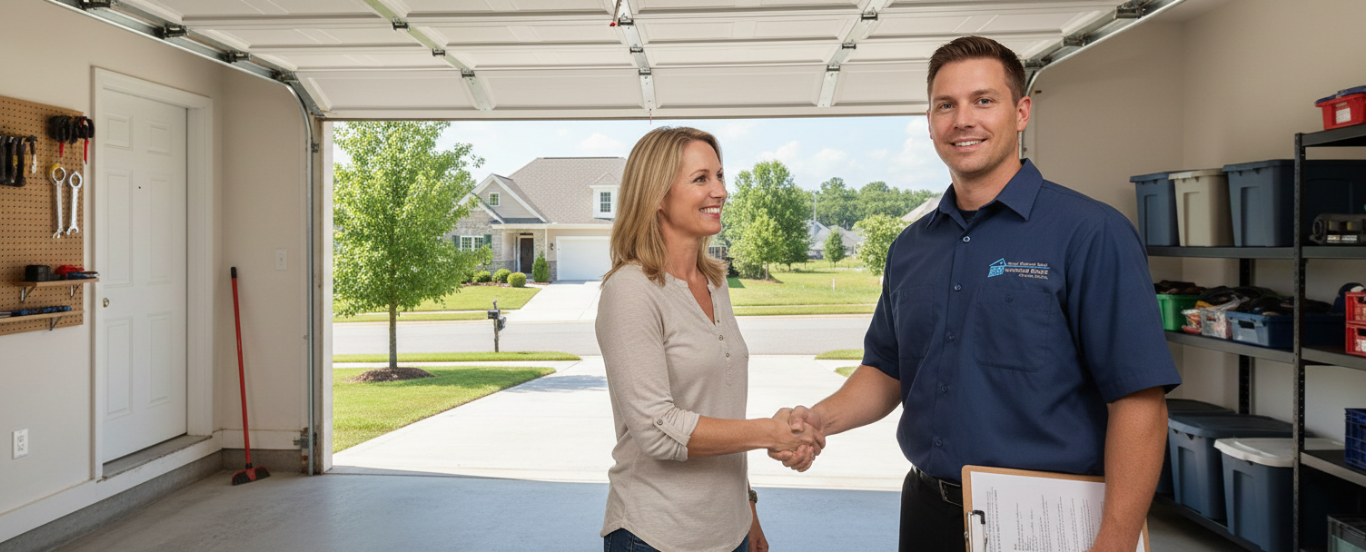
Advanced Overhead Door NC technician greeting homeowner in garage

Choosing a reliable garage door company is one of the most important steps you can take to protect your home. Your garage door affects security, curb appeal, and day-to-day convenience. Poor installation or rushed repairs can lead to recurring issues, higher costs, and potential safety concerns.

At Advanced Overhead Door NC, our goal is to help homeowners make informed decisions. This guide explains which questions to ask and which red flags to avoid before choosing a garage door company.


Why Choosing Local Matters

Hiring a local garage door company offers advantages that national or lead-based companies cannot provide. Local technicians understand the homes and neighborhoods in the Denver NC and Charlotte metro area, which helps them diagnose problems more accurately and recommend better solutions.

Benefits of choosing local include:

  • Faster response times
  • Easy verification of business legitimacy
  • Strong reputation within the community
  • Long-term accountability

For trusted garage door service, visit: https://garagedoorexpertservice.com/


Questions to Ask Before Hiring a Garage Door Company

1. How long have you been in business?

Experience often reflects reliability and workmanship. A long-standing company is more likely to deliver consistent quality.

2. What services do you offer?

Make sure the company offers the services you need, such as:

  • Garage door installation
  • Garage door opener repair and installation
  • Spring replacement
  • Cable and track repair
  • Emergency repair service

You can view services here: https://garagedoorexpertservice.com/

3. Do you offer warranties on labor and parts?

A reputable company provides clear written warranties that explain what is covered and for how long. This gives you peace of mind if a part fails shortly after installation or repair.

4. Can you provide references or reviews?

Reliable companies have satisfied customers who are willing to share their experience. Ask for recent references and check online reviews to see how the company handles service, scheduling, and follow-up.

5. Are your technicians trained or certified?

Garage door systems are mechanical and can be dangerous if handled incorrectly. Trained technicians know how to diagnose issues, make repairs safely, and follow manufacturer guidelines.

6. Are you licensed and insured?

Licensing and insurance protect you if something goes wrong on the job. Never hesitate to ask for proof of insurance before work begins.

7. Will I receive a written estimate?

A written estimate explains the scope of work, parts, and costs in advance. This helps prevent surprise charges and keeps everyone on the same page.


Additional Factors to Consider

Professional communication

From the first phone call to the final inspection, the company should communicate clearly. Look for prompt responses, helpful answers, and a respectful tone.

Transparent pricing

It is smart to get more than one quote so you understand typical pricing in your area. Be cautious of prices that are far lower than others, since that can signal cheap materials or rushed work.

Post-installation support

Ask about maintenance options and follow-up support. A reliable provider will stand behind their work and be willing to come back if something does not seem right.


Red Flags to Avoid

1. No physical address or changing business names

Companies without a verifiable local address or that frequently change names are hard to hold accountable. Always confirm where they are based.

2. Lack of insurance or licensing

If a company cannot show proof of insurance or proper licensing, do not proceed. This puts you at unnecessary risk.

3. High-pressure sales tactics

Be wary of anyone who pushes you to make a fast decision or approve costly upgrades on the spot. Reputable companies give you time to think and compare options.

4. Extremely low quotes

Very low prices may sound appealing, but they often come with trade-offs like poor-quality parts or shortcuts in installation.

5. No written contract or unclear warranty terms

A professional company will provide a written contract and clearly explain warranty coverage. If details are vague or only verbal, that is a concern.

6. Poor communication or unprofessional behavior

Unreturned calls, missed appointments, or rude behavior are signs you may not receive dependable service.

7. Lead-selling services instead of real technicians

If the name you call does not match the name on the truck or uniform, you may be dealing with a lead seller instead of a true local company. Work directly with a company that clearly identifies itself at every step.


Conclusion

Choosing a garage door company should feel straightforward when you know what to look for. By asking the right questions and watching for common red flags, you can make a confident decision and protect your home.

Advanced Overhead Door NC proudly serves Denver NC and the Charlotte area with expert repairs and quality installations.

Ready for fast, reliable service?
Request help today: https://garagedoorexpertservice.com/

How Much Does Garage Door Repair or Replacement Cost in Denver and Charlotte?

A garage door plays an important role in home security, convenience, and curb appeal. When it starts to fail, homeowners in Denver, NC and the Charlotte metro area often wonder what repair or replacement should cost. Below is a clear breakdown based on local averages, labor rates, and common garage door styles.


Average Garage Door Replacement Costs

Typical range: $1200 to $3500

Most homeowners fall within this range for a new door that includes parts, hardware, and installation.

  • Single-car garage door: $1200 to $2700 installed
  • Two-car garage door: $2400 to $3500 installed

Specialty glass roll-up doors and high-end custom builds can reach $5500 to $6500 depending on materials and features.

View garage door replacement services

Not sure which door is right?
Schedule a free consultation with a local technician for style recommendations and pricing options.

Garage Door Repair Costs

The average garage door repair cost across Denver, NC and Charlotte is around $190, though this changes based on the part and the complexity of the repair. Service call fees typically range from $150 to $175 plus parts and tax.

Common repairs include:

  • Broken torsion or extension springs
  • Bent tracks
  • Sensor alignment issues
  • Worn rollers
  • Panel dents or cracks

View garage door repair services


Factors That Influence Your Cost

  • Door material: Steel is affordable and durable. Wood and glass cost more.
  • Size: Larger doors require more material and heavier hardware.
  • Insulation: Helps with temperature, noise control, and efficiency.
  • Windows and decorative upgrades: Improve curb appeal but add cost.
  • Hardware and tracks: New doors often need matching hardware for weight balance.
  • Disposal: Removal of the old door may be an additional charge.

What to Expect in Your Area

Denver, NC

Replacement pricing typically ranges from $1200 to $3500 including installation. Many homeowners choose insulated steel or carriage-style designs for durability and curb appeal.

View garage door service in Denver, NC

Charlotte Metro

Replacement pricing ranges from $700 to $3500 depending on door type and features. Some HOA communities have rules for style and color.

View garage door service in Charlotte, NC


When to Replace Instead of Repair

  • Repeated spring or track failures
  • Rust or warping on door panels
  • Loud grinding or scraping noises
  • Sagging or uneven movement
  • A door older than 15 to 20 years

Over time, replacement becomes more cost-efficient than constant repairs.


Why Professional Installation Matters

A garage door is the largest moving part of your home. Incorrect installation can cause safety risks, premature wear, or warranty problems.

  • Correct spring tensioning and alignment
  • Safe removal of old hardware
  • Warranty protection
  • Balanced movement for long-term performance

Learn about yearly maintenance options

Ready for a quote?
Speak with a certified technician and explore door styles, pricing, and installation timelines.